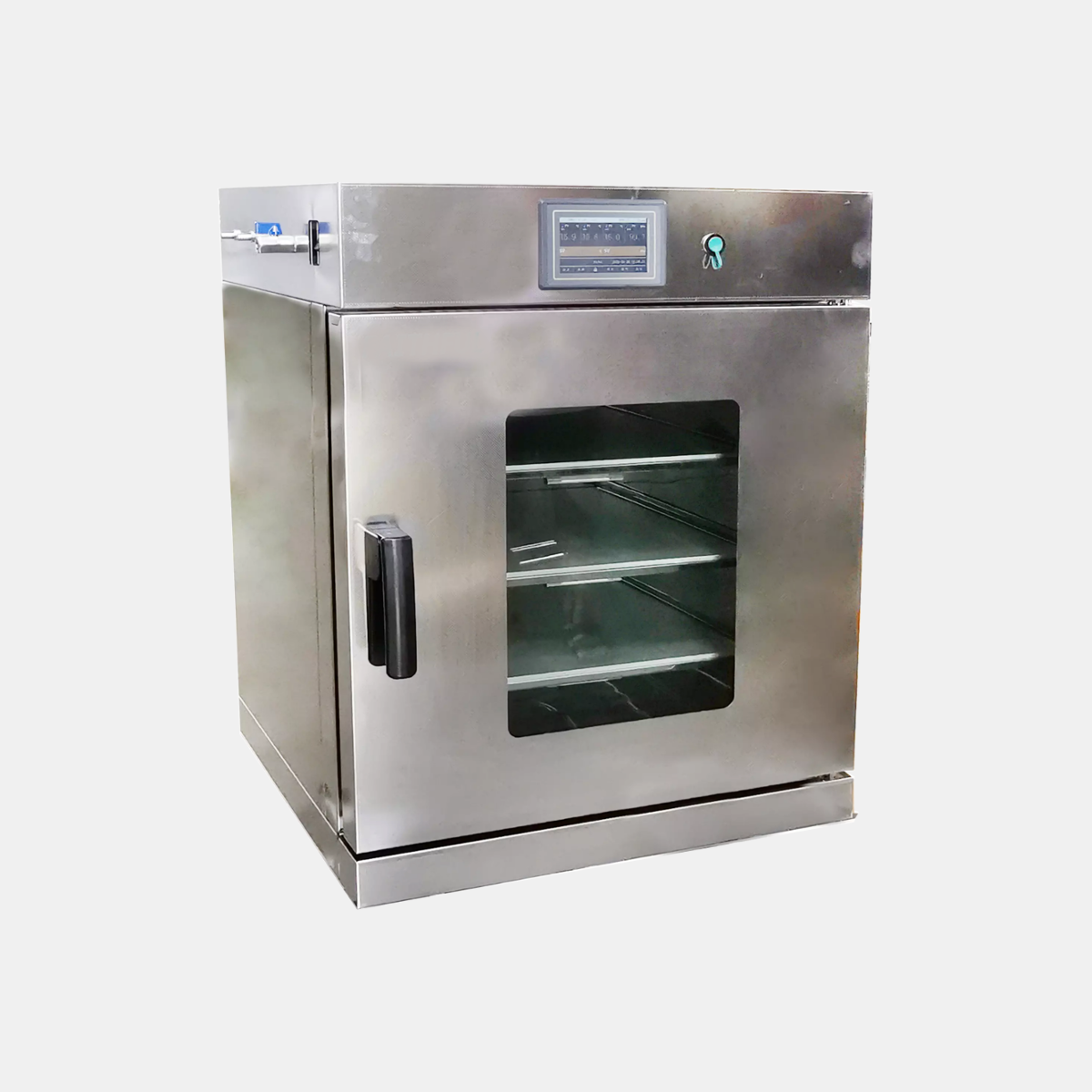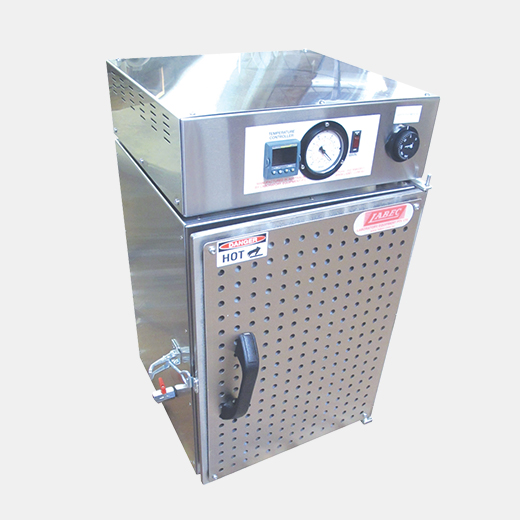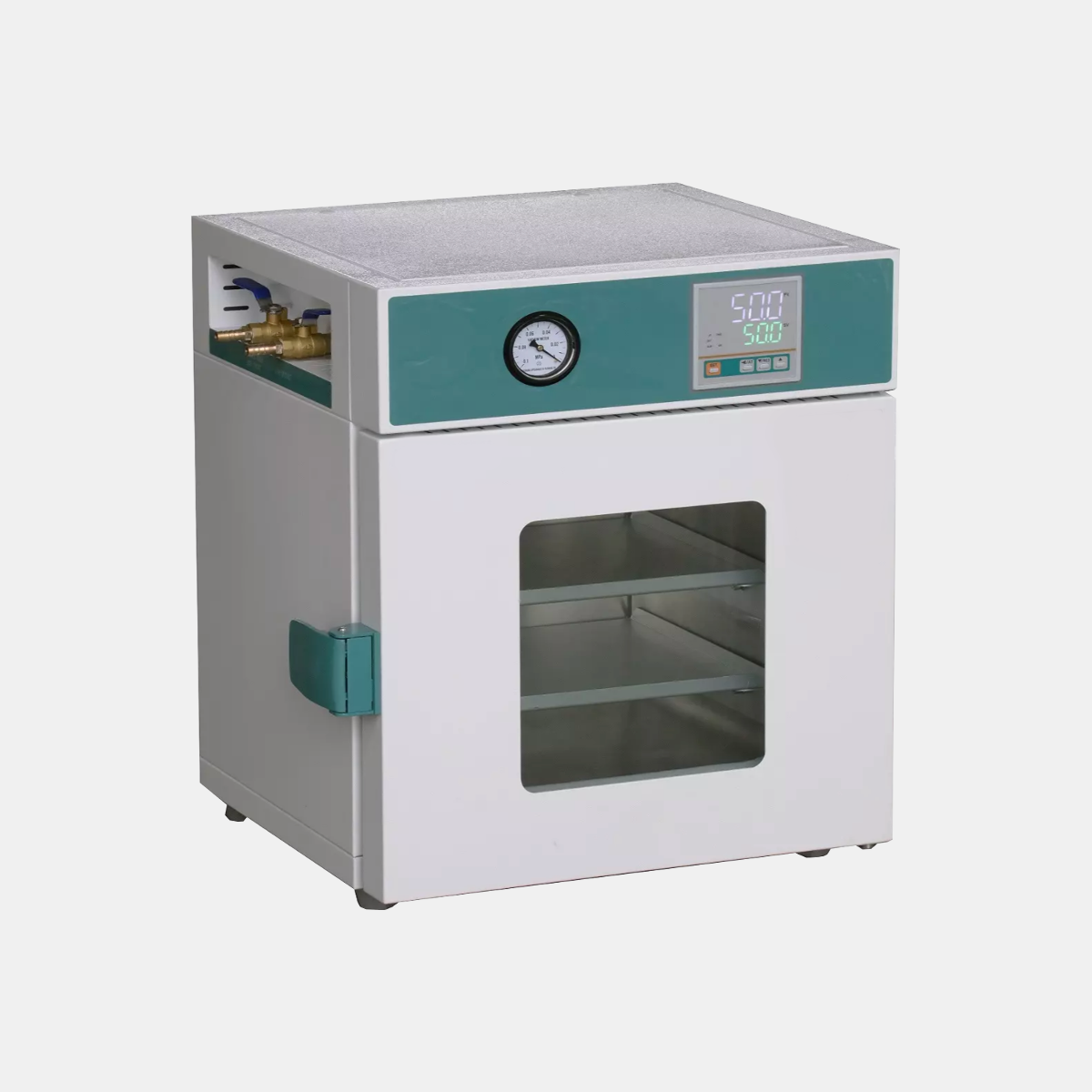
Vacuum Drying Ovens
Standard drying won’t cut it when handling delicate, unstable, or heat-sensitive materials. Labec vacuum drying oven is your solution, offering a controlled, low-pressure environment to gently remove moisture while protecting the integrity of your samples.
Whether you’re working with pharmaceuticals, fine powders, or reactive compounds, our laboratory drying ovens bring accuracy and reliability.
The Purpose of Vacuum Drying Ovens
Vacuum drying allows you to dry decomposable and heat-sensitive substances at lower temperatures by reducing pressure inside the chamber. This lowers the boiling point of water, preventing thermal degradation and oxidation. Also used to sterilise glass, it’s more controlled, efficient and less risky, especially for delicate or volatile substances.
How Does It Compare to Dehydrating Ovens?
While both aim to remove moisture, dehydrators rely on ambient or forced air at higher temperatures to dehydrate materials in an oven. It’s better for general drying or sample prep, but not always suitable for fragile compounds, which makes vacuum laboratory drying ovens the go-to choice for safer, more precise results.
Benefits of Vacuum Drying in Modern Applications
By lowering atmospheric pressure inside the vacuum oven, moisture evaporates at significantly lower temperatures. This results in:
- Preservation of Sample Integrity: Ideal for heat-sensitive or easily decomposed materials.
- Reduced Oxidation Risk: Lower oxygen levels mean safer drying for reactive substances.
- Lower Drying Temperatures: Avoid thermal stress while maintaining effectiveness.
- Improved Consistency: Maintain uniform conditions for reproducible results.
- Faster, Cleaner Workflows: Efficient drying with less contamination and fewer processing steps.
Features Labec Vacuum Laboratory Drying Ovens Offer
Designed for performance, reliability, and integration into complex workflows, Labec drying oven for industrial, medical, pharmaceutical and research applications ensures precision in every moment.
Choose from a variety of capacities and configurations to suit your lab’s needs, including:
- Digital or automatic controls for accurate, repeatable temperature and vacuum settings.
- Models rated up to +400ºC for demanding thermal requirements.
- Stainless steel chambers and Inconel heating elements for long-term durability and easy cleaning.
- Vacuum levels down to <133 Pa, suitable for sensitive materials and low-pressure drying.
- Economy and high-performance options, balancing budget with function.
- Customisable sizes and vacuum port configurations to suit both small labs and specialised high-tech setups.
Trusted Across Pharmaceutical, Chemical & Industrial Labs
Vacuum lab drying ovens are widely used in:
- Pharmaceutical R&D and compounding, where purity and thermal control are critical.
- Materials testing labs, especially for composites, polymers, and adhesives.
- Chemical and environmental labs working with reactive or air-sensitive compounds.
- Research and QC labs needing repeatable, low-temp drying.
- Production settings that require contaminant-free drying.
Lab Drying Ovens: The Labec Edge
With over 80 years of experience powering Australian science, research, and manufacturing, Labec delivers vacuum drying units built for performance, reliability, and accuracy.
- Designed, built, and backed by a trusted Australian team.
- Tailored to your workflow with custom sizes, temperatures, and configurations.
- Built to meet Australian standards with full calibration and servicing support.
- Fast lead times and responsive customer service to minimise downtime.
- Long-term support with spare parts, servicing, and a 12-month conditional warranty.
Find the Right Fit Today
Whether replacing one unit or scaling up your lab, Labec vacuum drying ovens offer the precision and flexibility your team needs to do great work. Explore the full range, or contact us for expert advice.
Frequently Asked Questions
What is a vacuum-drying oven?
A vacuum-drying oven is a specialised piece of laboratory equipment designed for drying heat-sensitive, easily decomposed, and easily oxidisable materials. It maintains a vacuum environment to facilitate drying at lower temperatures, thus preserving material integrity and reducing the risk of thermal degradation. This type of oven is commonly used in chemical and pharmaceutical processing.
What is the vacuum drying method?
The vacuum drying method involves removing moisture from materials under reduced pressure, typically in a vacuum drying oven. This allows for drying at lower temperatures, which is crucial for heat-sensitive materials. It prevents oxidation and provides a controlled environment, reducing drying time and improving efficiency.
What is the difference between the vacuum oven drying method and the air drying method?
Vacuum Oven Drying
Utilises reduced pressure to lower the boiling point of water, allowing drying at much lower temperatures. This method is ideal for heat-sensitive materials as it minimises oxidation and thermal degradation. It’s more controlled and efficient, especially for delicate or volatile substances.
Air Drying
Relies on natural or forced air circulation at ambient or slightly elevated temperatures. It’s simpler and less costly but can be slower and less uniform. Suitable for materials that are not sensitive to heat or oxidation, air drying might not be as precise in moisture removal compared to vacuum drying.
What are the different types of vacuum ovens?
Vacuum ovens come in various types, each designed for specific applications. Common types include:
- Standard Vacuum Ovens: Used for general drying and heating applications in a vacuum.
- High-Temperature Vacuum Ovens: Suitable for more demanding applications requiring higher temperatures.
- Compact Vacuum Ovens: Ideal for space-limited environments or small-scale operations.
- Chemical-Resistant Vacuum Ovens: Designed to withstand corrosive materials and harsh chemicals.
Each type offers unique features like different temperature ranges, sizes, and control systems, catering to diverse laboratory needs.